
Jeremie Frimpong’s most striking attribute, the element of his performance that immediately captures the attention of any observer upon witnessing this whirlwind on the field, is his extraordinary speed.
If the lightning-fast Bayer Leverkusen departure were to reach his maximum velocity in a residential zone, he would undoubtedly receive a speeding citation.
Quite literally—he has been recorded at 22.6 mph this season. The ability to consistently surge forward during these explosive runs is arguably even more remarkable, as only one player in the Bundesliga has achieved more individual sprints than Frimpong.
However, Arne Slot will likely be just as captivated by Frimpong’s adaptability as he is by his speed.
A right back with offensive instincts, he has also played on the left side and has even appeared as an attacking midfielder at times.
This presents a variety of fascinating possibilities concerning his utilization at Liverpool, now that his transfer has been officially confirmed.
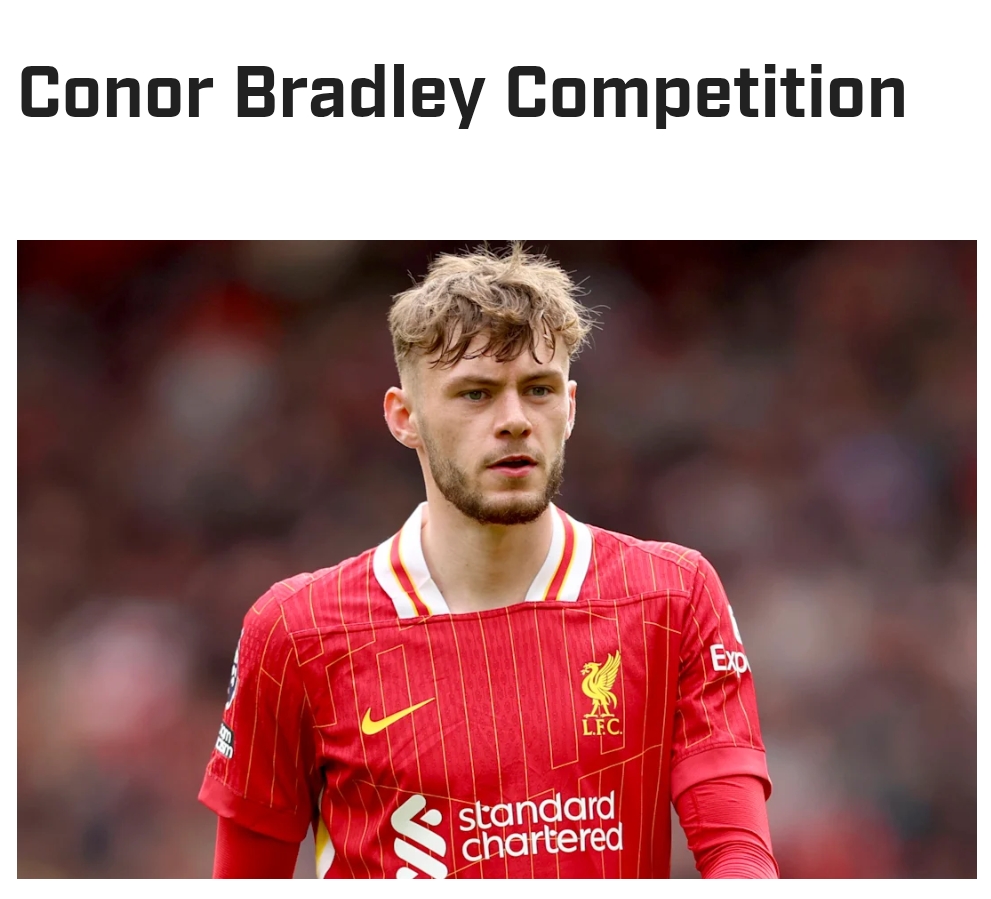
The most apparent solution may indeed be the one chosen by Slot. Trent Alexander-Arnold is departing Anfield amidst a chorus of boos and has—seemingly—been succeeded by another right back.
Conor Bradley has been prominently identified by Liverpool’s manager as Alexander-Arnold’s natural heir in that role, with Slot’s verbal endorsement reinforced by a new contract for the 21-year-old. The gifted Northern Ireland international possesses numerous attributes, yet durability is not currently among them.
Since he made 44 appearances on loan at Bolton Wanderers in the third tier two years ago, Bradley has not yet accumulated more than 17 starts in a single season for Liverpool.
Over the last few seasons, the talented right back has been sidelined for over 230 days due to injuries.
Frimpong will certainly assist in managing Bradley’s workload while offering an experienced alternative in his possible absence.
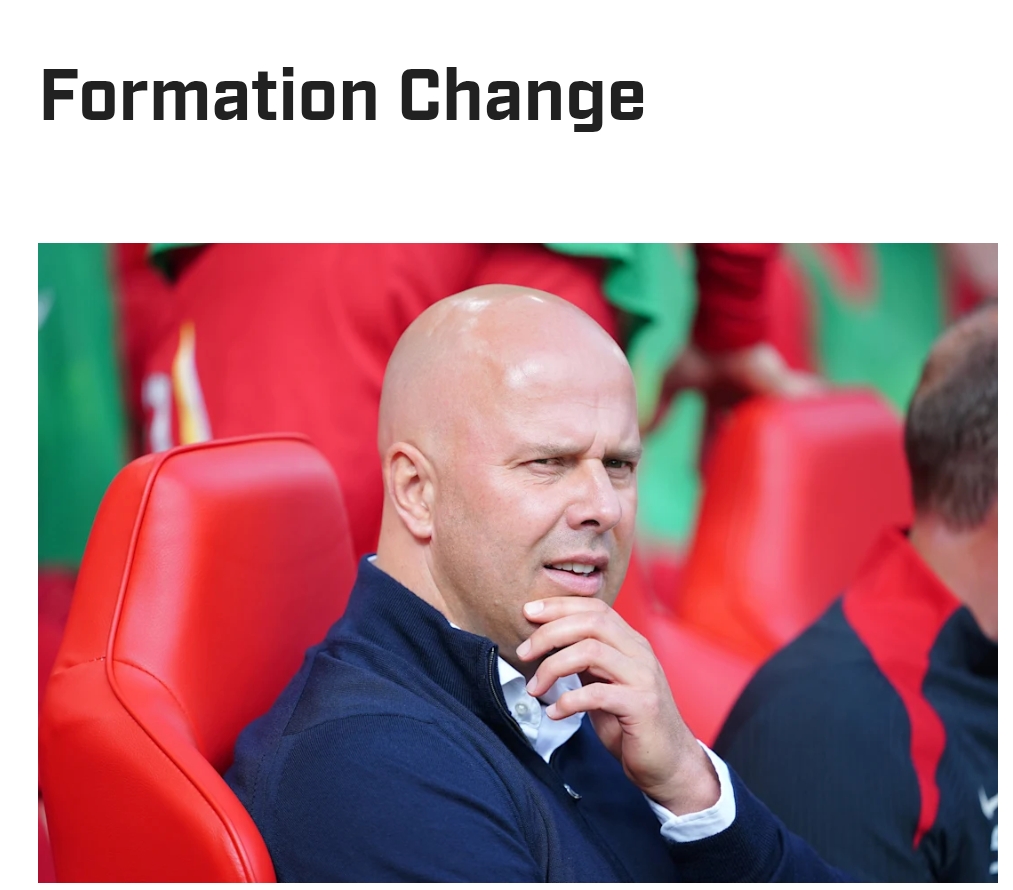
A 3-4-3 formation would allow Bradley to tuck in at right centre back, restore Frimpong to his favoured position at wing back and nudge Salah closer to goal as part of the front three.
Yet, this would represent quite a significant leap in tactical approach for all involved (aside, of course, from Frimpong).Liverpool as a football club are synomous with a back four. When Sir Bobby Robson was relentlessly asked about his reluctance to move away from a 4-4-2 formation by Pete Davies in All Played Out, he cited Liverpool as the golden example of how to excel with four defenders.
His case wasn’t helped by the club’s subsequent 30-year wait for a league title, but the back four has persisted.
Slot doesn’t have a long record of playing with three centre backs either. The former Feyenoord and AZ Alkmaar boss has used a back three exactly once during his last 261 games in management.